
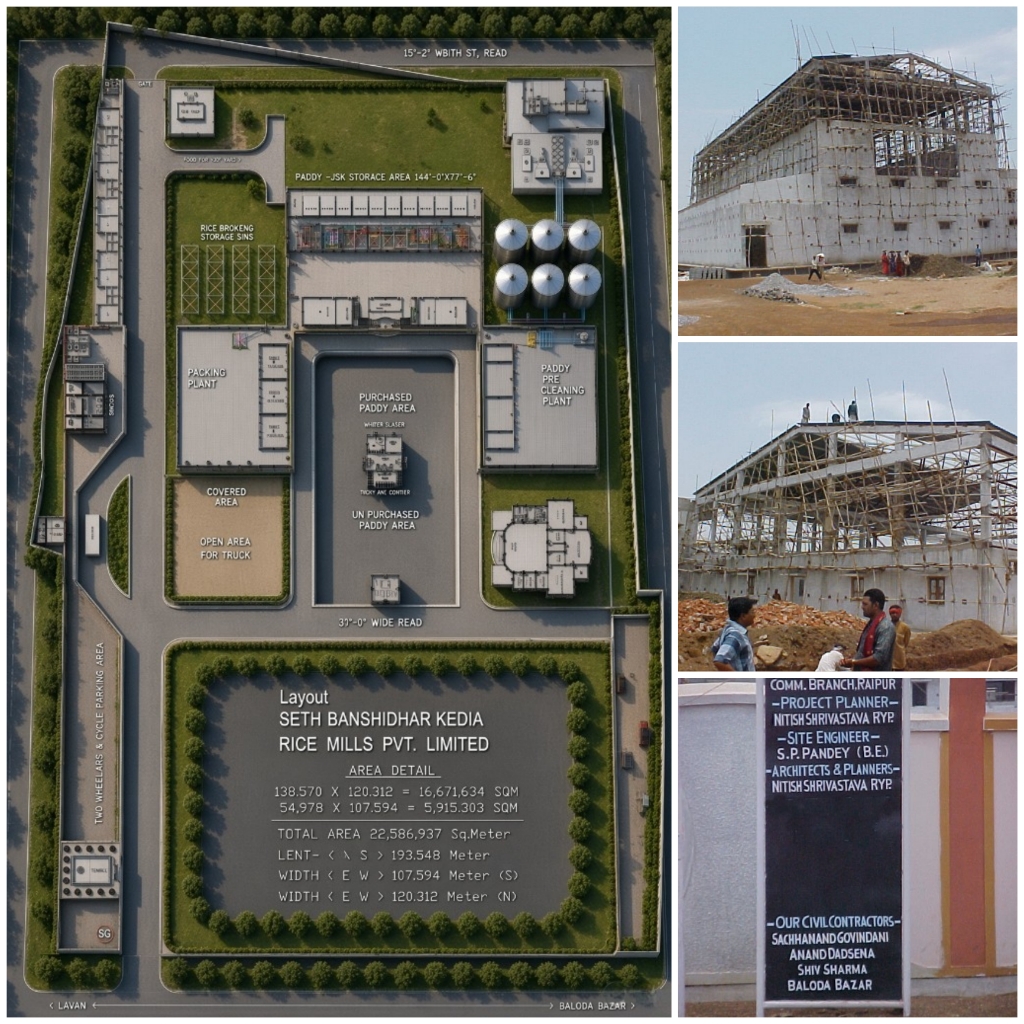
Industrial and agro-processing architecture is one of the most technically demanding sectors of the built environment. Unlike commercial or residential projects, where human occupancy dictates spatial priorities, industrial facility design is governed by process thermodynamics, heavy machinery dynamics, high-volume vehicular logistics, and stringent statutory compliance. In central India—the agricultural heartland of Chhattisgarh, renowned as the 'Rice Bowl of India'—designing agro-industrial processing facilities demands specialized architectural and structural engineering expertise.
The Industrial Matrix: Logistics, Hygiene, and Structural Spans
An agro-industrial facility, such as an automated modern rice mill, solvent extraction plant, or cold-chain logistics depot, represents a multi-million-rupee manufacturing asset. Any architectural design flaw that bottlenecks truck turnaround or traps grain dust compromises profitability and poses severe fire hazards.
Key architectural imperatives in agro-industrial engineering include:
- Uninterrupted Clear-Span Structural Engineering: Designing large-span Pre-Engineered Building (PEB) steel frames or heavy RCC portal frames ranging from 24 to 45 meters without intermediate columns, allowing unobstructed layout of automated processing machinery, bucket elevators, and sorting lines.
- Strict Hygiene & Contamination Zoning: Dividing the facility into three distinct environmental zones: Raw Material Intake (dirty zone), Automated Processing & Parboiling (intermediate zone), and Packaging & Finished Product Storage (clean sterile zone).
- Gravity-Driven Material Flow: Utilizing vertical multi-tier floor configurations that harness gravitational flow for grain transfer, slashing mechanical conveyor energy consumption by up to 28%.
Vehicular Logistics & Weighbridge Flow Engineering
During peak harvesting seasons, agro-processing plants process hundreds of multi-axle freight trucks daily. Our masterplans mandate continuous one-way loop circulation: incoming trucks enter via a dedicated electronic weighbridge, proceed to hydraulic tipping bays, circle through an expansive paved holding yard, and exit through a tare-weight station without ever crossing paths with finished-goods transport fleets.
Case Study: Seth Banshidhar Kedia Rice Mills Pvt. Ltd. (Lavan, Balodabazar)
Client & Scope: Comprehensive architectural masterplanning, heavy industrial structural design, and processing plant layout for a mega rice milling and grain storage complex.
The Industrial Challenge: Integrating massive parboiling and drying boiler infrastructure, automated high-speed milling lines, expansive raw paddy godowns, and heavy vehicular holding yards across extensive acreage in Balodabazar district.
Engineering & Masterplanning Solutions:
- Heavy Machine Vibration Isolation: Designing decoupled RCC raft foundations with specialized elastomeric dampening pads for industrial grain hullers and polishers, preventing harmonic vibration transfer to primary building structures.
- Optimized Aeration & Dust Control: High-bay ridge ventilators and engineered louver systems that continuously evacuate processing heat and explosive organic grain dust without allowing monsoonal moisture ingress.
- Zero-Bottleneck Vehicular Circuit: A dual-carriageway concrete perimeter roadway capable of bearing 40-tonne axle loads, ensuring rapid turnaround for logistics trucks even during torrential rains.
The Outcome: The Kedia Rice Mills facility stands as a premier agro-processing showcase in Chhattisgarh, operating with maximum operational efficiency, pristine hygienic standards, and exemplary structural reliability.
Essential Statutory Compliance Guidelines for Industrial Promoters
When planning a manufacturing or agro-processing plant in Chhattisgarh, ensure your consulting team handles all statutory clearances proactively:
- Chief Inspector of Factories (CIF) Approval: Architectural layouts must strictly comply with mandatory worker welfare provisions, ventilation ratios, and minimum fire escape distances.
- Pollution Control Board (CEPCB) Clearances: Integration of Effluent Treatment Plants (ETP), boiler bag filters, and ash disposal buffers from the earliest concept stage.
- Industrial Fire Safety (NBC Part IV): Dedicated water reservoirs for hydrants, sprinkler loops in storage godowns, and unobstructed 6-meter perimeter fire engine access lanes.